
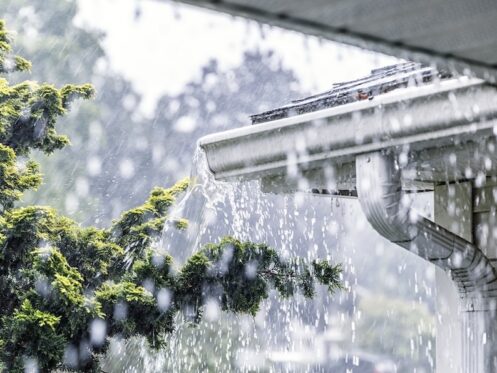
A gutter system may appear perfectly functional until a heavy rain comes along. Gutter leaks rarely appear at random locations. Most occur where water flow, debris accumulation, age, and structural movement place stress on the gutter system.
Call for gutter repair as soon as possible when you see gutters leaking after heavy rain. Leaking gutters may cause foundation problems, siding damage, landscape erosion, and wood rot. Here are some common areas that may leak after a downpour.
1. Gutter Seams and Joints
One of the most common places gutters begin leaking is at the seams and joints. These areas are where individual sections of the gutter system connect.
Typical sectional gutter systems use sealants and connectors to create watertight connections between sections. If the sealant or connectors become damaged, water may leak from those areas.
Many homeowners first notice water dripping from the underside of the gutter rather than flowing toward the downspout. It’s often because leaking gutter seams sit beneath layers of dirt and debris.
2. Corner Sections
Inside and outside corners experience more stress than straight sections. This is because they handle water arriving from multiple directions. During heavy rain, large volumes of water converge at these points before flowing through the system.
This constant flow of heavy water places significant strain on seals and connections. Expansion and contraction from seasonal temperature changes also affect corner sections. Gaps may develop that allow water to escape.
Gutter corner leaks often cause water to run down the exterior walls of the home. Many homeowners mistake this for a roof leak because water appears higher on the home.
3. End Caps
End caps seal the ends of a gutter run and prevent water from escaping. Sealant around the cap may dry out, shrink, or separate from the metal. Corrosion may also develop around older end caps, especially in areas that remain damp for extended periods. Heavy storms often reveal end cap weaknesses immediately.
A leaking end cap may cause large amounts of water to drain near the foundation. If the leak continues for long periods, soil erosion and moisture problems may develop.
End-cap leaks are sometimes difficult to detect because they may only appear during intense rainfall. A brief inspection during dry weather may not reveal the problem. Homeowners should watch for water dripping from the end of the gutter or unusually wet soil beneath the area after a storm. These warning signs often indicate that repairs are necessary.
4. Downspout Connections
The connection between the gutter and downspout handles a large amount of water during a storm. If this connection is loose or damaged, water may leak before entering the downspout.
Problems often become worse when clogged gutters and downspouts restrict normal drainage. Leaves, twigs, seed pods, and roof granules often contribute to blockages. As debris accumulates, water stays trapped inside the gutter longer than intended. This prolonged exposure accelerates wear and increases the likelihood of leaks around downspout openings.
5. Hangers and Fasteners
Every gutter system depends on hangers, brackets, screws, or spikes to remain attached to the home. These connection points cause small holes in the gutter material. As gutters age, fasteners may loosen due to vibration, weather exposure, or repeated expansion and contraction. The holes surrounding these fasteners sometimes enlarge, allowing water to escape during storms.
Loose hangers may cause portions of the gutter to sag. When sections lose their proper slope, water collects in low spots rather than flowing toward the downspouts. The additional weight increases strain on the system and may create new leak locations.
6. Cracks and Corroded Sections
Small cracks often remain hidden until a downpour. During heavy rain, water passing through the gutter escapes through even tiny openings. What begins as a hairline crack may enlarge as water, debris, and temperature fluctuations stress the material.
Metal gutters face additional risk from corrosion. Protective finishes gradually wear away, exposing the underlying metal to moisture. Rust weakens the gutter wall and eventually creates holes large enough for water to escape.
Older gutter systems often develop multiple weak spots at the same time. You may repair one leak only to discover another nearby leak during the next storm. This is common when corrosion affects large portions of the gutter system.
Regular inspections help identify these issues before they become severe. Finding small cracks early often prevents more extensive repairs later.
Why Prompt Repairs Matter
Many homeowners view a leaking gutter as a minor inconvenience. But even small leaks may create significant problems when left unaddressed. Water that repeatedly falls in the same location may damage landscaping, saturate soil around the foundation, and contribute to basement moisture problems.
Leaks may also affect siding, trim, and other exterior building materials. Wood exposed to repeated moisture becomes more susceptible to rot and deterioration. Your repair costs may also increase if you delay gutter repairs for too long.
Gutter leaks rarely fix themselves. Catching problems early with regular maintenance helps protect your home from water damage and prevents small issues from becoming expensive repairs.
Contact LA Rain Pros today for a professional gutter inspection and gutter repair in Shreveport, LA.